|
.
|
|

|
|
|
|
|
|
.
|
  1 2 3 4 5 6 7 1 2 3 4 5 6 7
< Page 1 of 7 >
|
|
Editor's Notes:
|

|
|
<> By clicking on a
particular photo (or the
corresponding magnifying icon),
an enlarged version will appear.
|
|
<> The English text
below is a translation from the
original Romanian text received and
posted
|
|
<> Additional
translations are being sought
... We have posted so far:
|
|
|
|
.
I. The Entrance to Hell
(Intrarea
in Infern)
|
|
|
|
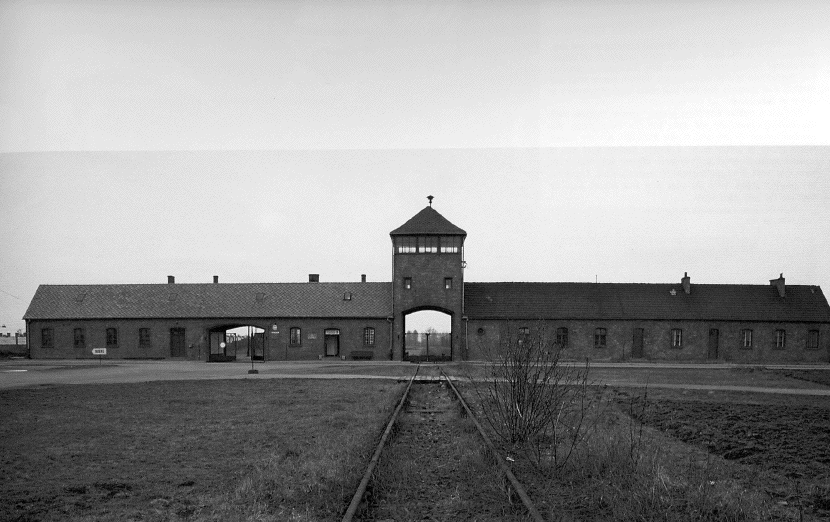
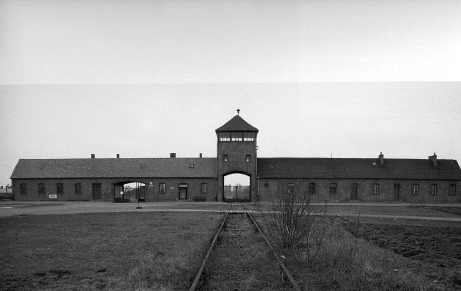
[I-1]
THIS is the famous entrance to Birkenau
(Auschwitz II) Concentration Camp.
The picture is taken from the outside of
the Camp. From May 1944 (but not
before), the railroad track was
constructed to enter directly into the
Camp through its front gate. From that
time on, all trains, arriving with
deportees from almost entire Europe,
would enter directly into the Camp on
one of the three (3) railroad
tracks constructed (as seen in the next
picture).
(The Original
Text in Romanian)
Aceasta este faimoasa poarta
a lagarului Birkenau (Auschwitz II).
Poza este luata din afara lagarului. Din
luna Mai 1944 (dar nu inainte), perechea
de sine a fost construita sa intre direct
in lagar prin poarta ei principala. De
atunci inainte, toate trenurile cu
deportati, care soseau din mai toata
Europa, intrau direct in lagar pe una din
cele trei (3) linii de sine construite (ce
se vad in fotografia urmatoare).
|
|
|
 For the Danish
translation [Dansk
oversættelse], please click in on
the icon at left. For the Danish
translation [Dansk
oversættelse], please click in on
the icon at left.
|
|
For the Dutch translation [Nederlandse
vertaling], please click in on
the icon at left.
|
|
For the French translation [traduction
française], please click in on
the icon at left.
|
|
For the German translation [Deutsche
übersetzung], please click in on
the icon at left.
|
|
For the Hungarian
translation [Magyar fordítás], please click in on
the icon at left.
|
|
For the Italian translation [traduzione
italiano], please click in on
the icon at left.
|
|
For the Polish translation [wersja polska], please click in on
the icon at left.
|
|
For the Russian
translation [ ], click on the
icon at left. ], click on the
icon at left.
|
.
|
.
II. The "Death Ramp"
("Rampa
Mortii")
|
|
|
|
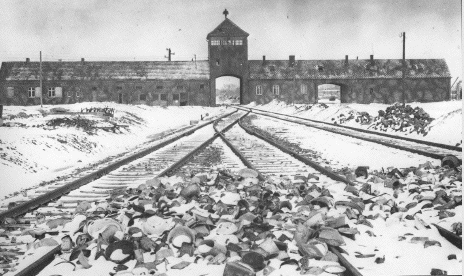
[II-1]
The same picture taken from the inside.
Now, we can see the entire railroad
tracks complex from within the Camp with
the space between the tracks known as
the "Death Ramp" because it was from
that place that the newly arrivals were
selected for who would go straight to
the gas chambers.
This railroad tracks
complex was built only in early 1944
when it was realized that the
deportation of Jews from Hungary,
including Northern Transylvania and
Subcarpathian Ukraine --both annexed at
that time to Hungary, would exceed all
previously known quotas. As a result of
that, Rudolf Höss, the commandant of the
Birkenau Camp went two times to
Budapest. There, he met with Eichmann
(head of Gestapo that was responsible
for resolving once and for all the
so-called Jewish problem) who,
temporarily, had moved his headquarters
to the capital of Hungary. Together,
they were able to come up with an
understanding with the Hortyst
authorities whereby they could "adjust"
the gassing and burning from the
Birkenau crematoria with the rate of
arrival of the incoming trains.
(The Original
Text in Romanian)
Aceeasi poarta fotografiata
din interior. Acum se vede intreg
complexul de linii ferate din incinta
lagarului, inclusiv spatiul dintre ele,
spatiu denumit "Rampa Mortii" care servea
drept loc de coborare din vagoane si de
selectare a celor sortiti camerelor de
gazare.
Acest complex s-a
construit abia la inceputul anului 1944
cind a devenit cunoscut ca deportarea
evreilor din Ungaria, inclusiv
Transilvania de Nord si Ucraina
Subcarpatica, amandoua anexate pe atunci
Ungariei, vor depasi tot ce cunoscuse
Holocaustul pana atunci. in consecinta,
Rudolf Höss, comandantul lagarului
Birkenau, a fost de doua ori la
Budapesta. Acolo, impreuna cu Eichmann
(seful sectiei din centrele Gestapoului
insarcinat cu rezolvarea definitiva a
problemei evreiesti) care isi mutase
provizoriu punctul de comanda in
capitala Ungariei au reusit, in buna
intelegere cu autoritatile horthyste de
resort, sa "armonizeze" capacitatea de
gazare si ardere a crematoriilor de la
Birkenau cu ritmul de deportare
preconizat.
|
|
|
For the Danish
translation [Dansk
oversættelse], please click in on
the icon at left.
|
|
For the Dutch translation [Nederlandse
vertaling], please click in on
the icon at left.
|
|
For the French translation [traduction
française], please click in on
the icon at left.
|
|
For the German translation [Deutsche
übersetzung], please click in on
the icon at left.
|
|
For the Hungarian translation [Magyar fordítás], please click in on
the icon at left.
|
|
For the Italian translation [traduzione
italiano], please click in on
the icon at left.
|
|
For the Polish translation [wersja polska], please click in on
the icon at left.
|
|
For the Russian
translation [], click on the
icon at left.
|
.
|
.
III. On the "Death Ramp"
Waiting for a New Transport
(Pe
"Rampa Mortii"
Se Asteapta Sosirea Unui Nou Transport)
|
|
|
|
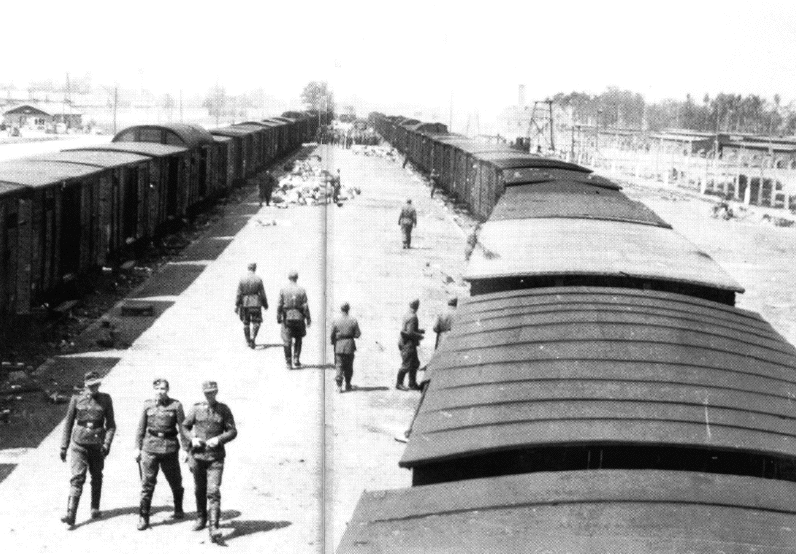
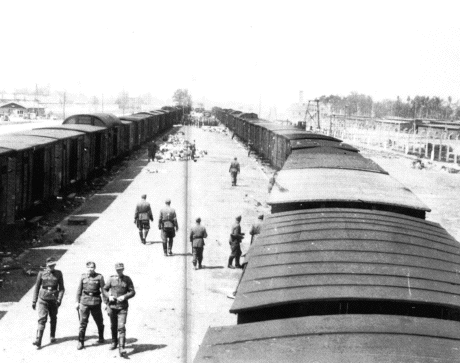
[III-1]
Now we can see the "Death Ramp" as it
looked in 1944. In the Spring and Summer
of that year, the 147 freight trains
carried (in their over 6000 locked
railcars with grated windows) 434,351
mothers and children, women and men. The
entire Jewish population from Hungary
and Northern Transylvania STOPPED HERE.
In here, on this Ramp, the BIG SELECTION
took place. From each transport
(consisting of some 3000 people) at
least 2000 have been selected for death.
From there, from that very Ramp that you
see, that looks so peaceful and
tranquil, 2000 innocent people were
selected, that looked no different than
you, TO GO STRAIGHT TO THE GAS CHAMBERS.
The remaining thousand
people were selected, temporarily, for
slave labor.
In the picture, you see
two empty trains. From these trains,
only 5 or 6 hours before, the previous
transport was disembarked. In the front
of the picture, we see small groups of
SS-men inspecting the Ramp to see that
everything is ready for the "welcoming"
of the new transport. Further back in
the picture, we can see some prisoners
(German "Haftlings) from the so-called Komando
"Canada" who are at the end of
their work of transporting and sorting
all the luggage collected from the
previous transport.
(The Original
Text in Romanian)
Acum aveti in fata "Rampa
Mortii" asa cum arata ea in 1944. In
primavara si vara acelui an, toate cele
147 de trenuri ce aduceau, in peste 6000
de vagoane zabrelite si lacatuite, 434.351
de mame si copii, femei si barbati --toti
evrei din Ungaria si Transilvania de Nord
s-au OPRIT AICI. Aici, pe aceasta rampa,
se facea MAREA SELECTIE. Din fiecare
transport (alcatuit in medie din cate 3000
de oameni) cel putin 2.000 au fost
selectati pentru moarte. De aici de pe
aceasta rampa, pe care o aveti in fata si
care pare atat de linistita si pasnica,
cei 2.000 de oameni nevinovati, semeni
de-ai dvs. dragi prieteni, PLECAU DIRECT
SPRE CAMERA DE GAZARE.
Cealalta mie era
selectata, provizoriu, pentru munca de
sclav.
In imagine vedeti doua
trenuri cu vagoanele goale. Din ele, cu
5-6 ore inainte, a coborat transportul
anterior. In prim plan mici grupuri de
SS-isti inspecteaza rampa, pentrua vedea
daca toatul este pregatit in vederea
"primirii" noului transport care urmeaza
sa soseasca in cateva minute. Undeva, in
capatul peronului se vad cativa
Haftling-i, din asa numitul Komando
"Canada", care sunt pe terminate
cu sortarea si transportul tuturor
bagajelor (scoase din vagoane) in
depozitele din apropiere.
|
|
|
For the Danish
translation [Dansk
oversættelse], please click in on
the icon at left.
|
|
For the Dutch translation [Nederlandse
vertaling], please click in on
the icon at left.
|
|
For the French translation [traduction
française], please click in on
the icon at left.
|
|
For the German translation [Deutsche
übersetzung], please click in on
the icon at left.
|
|
For the Hungarian translation [Magyar fordítás], please click in on
the icon at left.
|
|
For the Italian translation [traduzione
italiano], please click in on
the icon at left.
|
|
For the Polish translation [wersja polska], please click in on
the icon at left.
|
|
For the Russian
translation [], click on the
icon at left.
|
.
|
.

|
.
|