"Forget
You Not"™:
H o l o c a u s t
S
u r v i v
o r s a
n d R
e m e m b r a n
c e
P r o j e
c t
- Part VI -
|
 
T A B L E
O F
C O N T E N T S

|
|
< iSurvived.org >
|
|
< ForgetYouNot.org >
|
|
|

|
The
Holocaust "is
probably the
greatest and
most terrible
crime
ever committed
in the whole
history of the
world."
Winston
Churchill
|
|
|
VI. Holocaust Selected
Readings, Photos,
and Items of Interest
 
"The
fifth commandment, 'Thou
shall not kill,' is not
God's commandment at all:
It is a Jewish invention."
Statement
of the high Nazi official
Stahle after the protest,
on December 4, 1940,
by the evangelical priest
Sautter against the
criminal acts of
euthanasia
(http://www.sobibor.info)
|
1. Selected
Readings
|
|
2. Remembering
the Forgotten...
|
|
3. Notable
Events
|
4A. Inmate
Art from Concentration
Camps:
Expressing the
Inexpressible
|
4B. Contemporary
Art About and in
Response to
the Holocaust
|
4C. Holocaust
Literature
|
4D. Music
of the Holocaust
--A Remembering for
the Future
|
|
5. Holocaust
Memorial Foundations and
Museums
|
6. Notable
Web Sites Honoring
the
Memory of the Holocaust
|
7. Selected
Photos and Posters
Related to
the Holocaust
|
|
8.
Holocaust Memorial
Plaques, Stamps and
Related Artifacts
|
9. Holocaust
Online Exhibits
|
10. Nazi
Plunder of Valuables
|
|
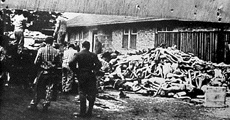
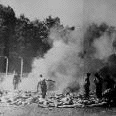
Pile Of Bodies At Dachau --Yad Vashem Archives

|
"When the first GI's
[American soldiers]
started returning home
from the war [after
liberating Dachau
and other camps],
one of the things that
drove them crazy was that
no one would believe what
they had to say!
No one would believe the
stories of what they saw."
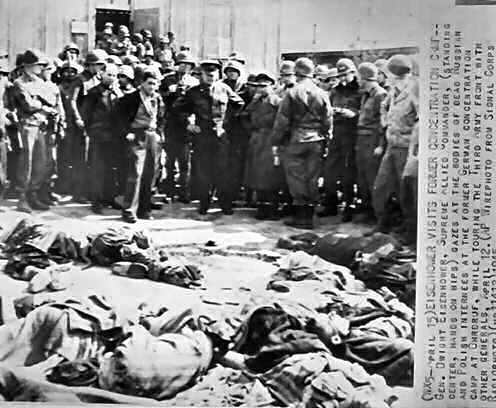
.Dwight
"Ike" Eisenhower, the
Supreme Commander of the
Allied Expeditionary Force
with other US
Officers at Ohrdruf,
a subcamp of the
Buchenwald concentration
camp,
after liberation.
Photo Credit:
The Holocaust
<martinfrost.ws/htmlfiles/holocaust.html>
 
|
.
1. Selected
Readings:
|

|
|
|
United
States National
Security Archive
Electronic
Briefing Book No.
150.
|
|
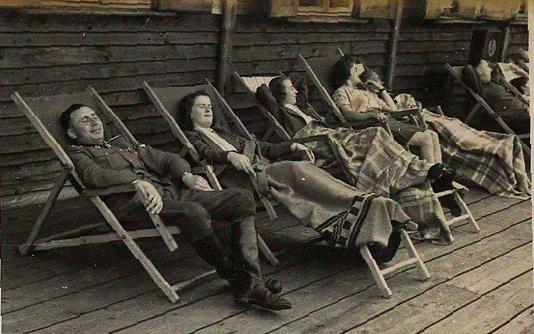
Between
savagery and killings, savouring the
simple pleasures of life:
Karl Höcker, adjutant to the
commandant of Auschwitz, and SS
auxiliaries relaxing at a recreation
lodge near the camp
.
R
O
M
A
N
I
|
|
H
O
L
O
C
A
U
S
T
|
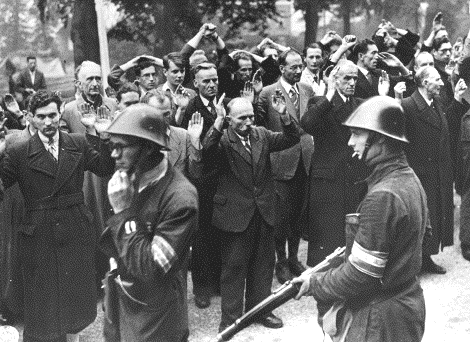
.Dutch
Collaborators: A round-up of
collaborators by Dutch troops.
United
States National Archives
<fcit.coedu.usf.edu/holocaust/gallery2/81877.htm>
Faith in God and
Man After Auschwitz: Theological
Implications
Yad Vashem -- by Emil
L. Fackenheim
.
|
.On
the
Extermination of
Jews in Poland
|
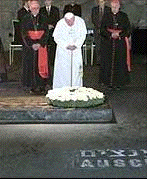
.
We wish to
remember.
But we wish to
remember for a
purpose, namely
to ensure that
never again evil
will prevail. ...
Only a world at
peace, with
justice for all,
can avoid
repeating the
mistakes and
terrible crimes of
the past.
.John
Paul II, Yad
Vashem, March 23,
2000.
.
|
|
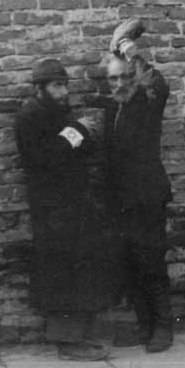
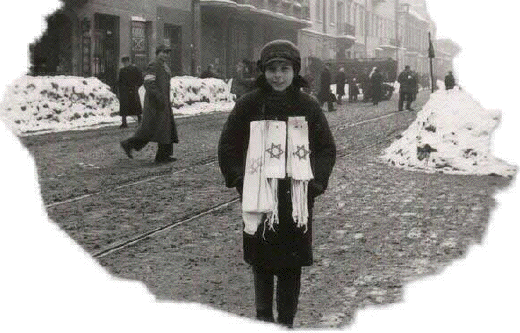
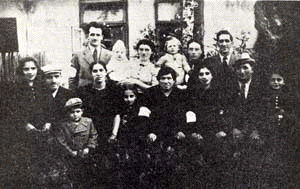
A Polish Jewish Family (The Rotmenschs)
--wife,
children and
grandchildren
with armbands
In order
to mark and
isolate the
Jews, a decree
of November
23, 1939,
ordered all
Jews above the
age of 10 in
the
General-Government
of Poland to
wear white
armbands with
a blue star of
David.
|
From
Yad Vashem
Archives
<www1.yadvashem.org/exhibitions/Wolbrom/holocaust/during_c.htm>
|
|
Gone
now are those
little towns
where the
shoemaker was
a poet,
The watchmaker
a philosopher,
the barber a
troubadour.
Gone now are
those little
towns where
the wind
joined
Biblical songs
with Polish
tunes and
Slavic rue
Where old Jews
in orchards in
the shade of
cherry trees
Lamented for
the holy walls
of Jerusalem.
Gone now are
those little
towns, though
the poetic
mists,
The moons,
winds, ponds,
and stars
above them
Have recorded
in the blood
of centuries
above the
tragic tales,
The histories
of the two
saddest
nations on
earth.
|
|
Polish
Jewish poet
Antoni Sonimsk
|
|
"We
can't tell two
stories, the
history of
Poland and the
history of the
Jews,
because simply
they exist
together and
they must be
told
together..."
Ewa
Junczyk-Ziomecka
|
Of
all the
occupied
countries,
the percentage
of Jews saved
in Poland was
the smallest,
since the
predominant
attitude was
hostile, while
rescue was an
exception to
the rule.
[Isaiah
Trunk]
|
.
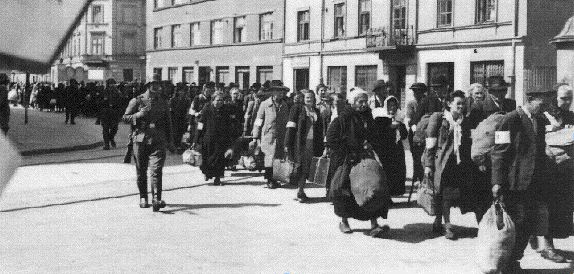
Krakow Ghetto Liquidation
|
.
|

From
the Editor
April 1998
--Volume XVIII,
Number 2
From
the Editor
January 1999 --
Volume XIX, Number
1
.
|
.
|
|
|
|
|
|
- From the Night of
the [Kristallnacht] Pogrom to the
Final Solution: Experiences and
Lessons
by Gerhart M.
Riegner
- The Holocaust and
the Catholic Church's Search for
Forgiveness
by James Bernauer,
S.J., Professor of Philosophy,
Boston College, USA
- The Warsaw Ghetto
Uprising, by Marek Edelman
- The Last Letter
of April 23, 1943 from Mordecai
Anielewicz, Warsaw Ghetto
Revolt Commander
- Prime Minister
Yitzhak Rabin Speech
at Central
Memorial Assembly in Warsaw,
Poland
on the 50th Anniversary
of the
Warsaw Ghetto
Uprising
- The Couriers of
the Jewish Underground in Poland
During the Holocaust
by Gary Scott
Glassman
- The Story of Mala
Zimetbaum and Edward Galiñski

1922-1944
|
Mala
Zimetbaum, interned
in Auschwitz-Birkenau,
was an interpreter
there. Despite her high
status, she gained the
sympathy of the inmates,
and in turn, helped her
fellow prisoners. She became
the first woman to
escape from Auschwitz, but was
caught and returned to
the camp. She committed
suicide rather than be
killed on the gallows.
[Source:
http://motlc.wiesenthal.com/pages/t087/t08761.html]
|
- We Remember
Treblinka!
- Naming the Jews
of Bocki
- The Rescue of the
Danish Jews
- What the Camps
Were Like,
told through the eyes of people
who suffered through them
- ECHOES OF A
VANISHED HERITAGE (by Martin
Rudner):
An historical
outline of the Jewish community of
Kuty,
a kehila in Eastern Galicia,
culminating in its destruction
during the Holocaust
- ECHOES OF A
VANISHED HERITAGE (by Martin
Rudner):
An account of the
Jewish community of Buczacz,
its history and society,
culminating in its destruction
during the Holocaust
- Insights Into
Europe's Auschwitz
- Remembering the
Kristallnacht:
Commemorating the
69th anniversary of Kristallnacht
at The New York Synagogue
Remarks by Dr.
Hans-Jürgen Heimsoeth, Consul
General of the Federal Republic of
Germany in New York, USA.
- On Truman's
"Cultural" Anti-Semitism
- "America,
Franklin D. Roosevelt and the
Holocaust" by William J. vanden
Heuvel
- The Holocaust
Chronicle
- New Revelations
on Holocaust trough declassified
CIA documents
- Catholics and
Jews Confront the Holocaust and
Each Other
- The 1999
John Courtney Murray Lecture -
- Oral and Written
Testimonies: Lithuania and the
Holocaust

- The Fred Roberts
Crawford Witness to the Holocaust
Project
- Australian Memories
of the Holocaust: Anka Fischer
- Nazi Conspiracy
and Aggression
- Women & The
Holocaust -- Personal Reflections
by Dr. Karin Doerr,
Concordia University, Canada
- The Bleeding Sky
:
My Mother Journey Through the Fire
- A Visit to
Auschwitz
- Auschwitz: A
Contested Space
- Edward R.
Murrow's Report From Buchenwald
- Italy and the
Holocaust
- The Holocaust in
Italy: Meeting the Challenge of
Holocaust and Genocide
- Italian Jews,
Jews in Italy, Holocaust
Literature, Holocaust Survivors,
Memoirs of the Holocaust
- Church Built in
Memory of Italian Holocaust
Victims
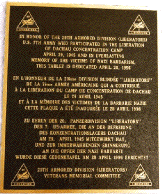
- "A Year in
Treblinka" by Yankel Wiernik,
Survivor of Treblinka
- "Hungary: The
Last Major Jewish People Facing
Nazi Destruction"
by Dr. Judith Fai-Podlipnik
- Unscrambling the
History of a Nazi Camp in Croatia
Who Was Killed and by
Whom Still Unsettles Croats and
Serbs
- "Rescue Through
Labor Service in Hungary: Captain
László Ocskay
and the 101/359
Labor Service Company" by Dan Danieli
- The Testimonies
of the Last Prisoners in the Death
Camp Chelmno
The Dachau
Liberators: Delivering Them From
Evil
|
When the first GI's started returning home
from the war,
one of the
things that
drove them
crazy was that
no one would
believe what
they had to
say!
No one would
believe the
stories of
what they saw.
|
|
|
http://www.aish.com/holocaust/overview/Liberation.asp
|
|
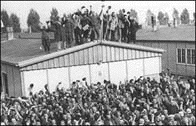
Dachau
liberated by the US Army

|
|
.The
Kindertransport
|
|
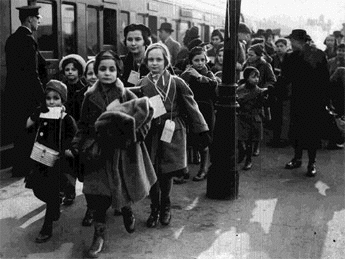
.Kindertransport
Photo
Credit:
<juedisches-museum-
berlin.de/exil/kindertransporte_quelle.html>
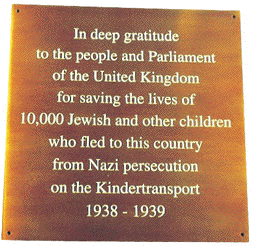
Plaque
unveiled by Sir
Nicholas Winton
on 16th
September 2003
at Liverpool
Street Station
in London, UK
--this main
London railway
terminus. Two of
the rescued
Kinder, Harry
Heber and Erich
Reich, were
present at that
memorial event.
|
|
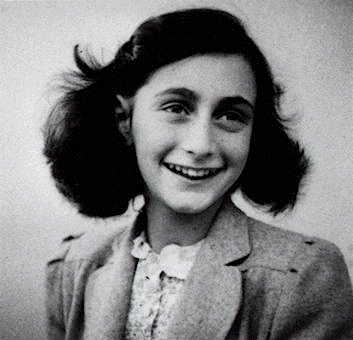
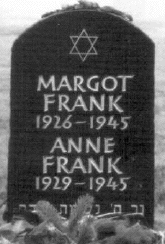
Anne
Frank: An
International
Symbol of Hope
for Mankind
On the Holocaust from Anne Frank's Diary:
"
...this cruelty
too shall end,
peace and
tranquillity
will return once
more"
"...I still
believe, in
spite of
everything, that
people are truly
good at heart."

.--
July 15, 1944.
|

|
|
 "I can see the world gradually being
turned into a
wilderness, I
hear the ever
approaching
thunder, which
will destroy
us too, I can
feel the
sufferings of
millions - and
yet, if I look
into the
heavens, I
think that it
will all come
out right,
that this
cruelty too
will end, and
that peace and
tranquility
will return
again. In the
meantime,
I must
uphold my
ideals, for
perhaps the
time will come
when I shall
be able to
carry them
out." "I can see the world gradually being
turned into a
wilderness, I
hear the ever
approaching
thunder, which
will destroy
us too, I can
feel the
sufferings of
millions - and
yet, if I look
into the
heavens, I
think that it
will all come
out right,
that this
cruelty too
will end, and
that peace and
tranquility
will return
again. In the
meantime,
I must
uphold my
ideals, for
perhaps the
time will come
when I shall
be able to
carry them
out."
."It's a
wonder I
haven't
abandoned all
my ideals,
they seem so
absurd and
impractical.
Yet I cling to
them because I
still believe,
in spite of
everything,
that people
are truly good
at heart.
. Its's
utterly
impossible for
me to build my
life on a
foundation of
chaos,
suffering and
death. I see
the world
being slowly
transformed
into a
wilderness, I
hear the
approaching
thunder that,
one day, will
destroy us
too, I feel
the suffering
of millions.
And yet, when
I look up at
the sky, I
somehow feel
that
everything
will change
for the
better, that
this cruelty
too shall end,
that peace and
tranquility
will return
once more"
----From Anne Frank's Diary, July 15th 1944.
|
|
.
|
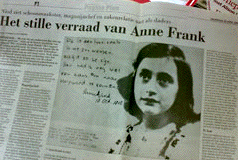
.On the Silent Betrayal of Anne Frank
|
Somebody
called the
German
Security
Police to
notify them
that Jews were
in hiding at
263
Prinsengracht.
Exactly who
that was has
never been
discovered.
This is a
question that
many people
still want
answers to.
There were
certain
suspicions and
a first
investigation
was conducted
in 1948.
Fourteen years
later, once
again, an
attempt was
made to
unravel the
mystery of who
was
responsible
for the
betrayal. In
1998, Melissa
Müller, in her
biography
about Anne
Frank,
suggests a
woman named
Lena-Hartog
van Bladeren
as a possible
suspect. Two
years later,
another
writer, Carol
Anne Lee,
presents a new
theory in her
biography
about Otto
Frank. She
believes the
guilty party
is Tony
Ahlers, an
acquaintance
of Otto Frank.
|
|
<annefrank.org/content.asp?lid=2&pid=107>
|
.
|
.
|
.
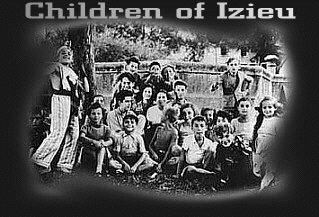
.The Children Of Izieu, France
|
|
.
|
|
Eleven-year-old Liliane Gerenstein, born January 13,
1933 in Nice,
France,
wrote a
heart-rending
letter to God
just days
before the
children of
Izieu were
sent to their
deaths at
Auschwitz:
|

|
"God? How good
You are,
how kind and
if one had to
count the
number
of goodnesses
and kindnesses
You have done,
one would
never finish.
God?
It is You who
command.
It is You who
are justice,
it is You
who reward the
good and
punish the
evil.
God?
It is thanks
to You
that I had a
beautiful life
before,
that I was
spoiled,
that I had
lovely things
that others do
not have.
God?
After that, I
ask You one
thing only:
Make my
parents come
back, my poor
parents
protect them
(even more
than You
protect me)
so that I can
see them again
as soon as
possible.
Make
them come back
again.
Ah! I had such
a good mother
and such a
good father!
I have such
faith in You
and I thank
You in
advance."
|
|
|
|
|
|
The
poem below was
written by a
young person in
the Terezin
Ghetto, where
the arts
flourished as a
defiance of the
soul, even in
Children.
Nothing free,
like the
butterflies or
the Jews, lasted
long in the
Captivity of
brutal men.
Pavel could
watch
butterflies soar
over barbed
wire, fences and
guns, until
there were no
longer
butterflies. It
is a poignant
reminder not
only of the
depth of
expression in
young Jewish
souls, but of
the captivity of
art in having to
hide defiance
and honor in
metaphor.
|
|
 "I
Never saw
Another
Butterfly" "I
Never saw
Another
Butterfly"
|
I
never saw
another
butterfly . .
.
The
last, the very
last,
so richly,
brightly,
dazzling
yellow.
Perhaps
if the sun's
tears sing
against a
white stone .
. .
Such,
such a yellow
Is carried
lightly `way
up high.
It
went away I'm
sure because
it
wished to kiss
the world
goodbye.
For
seven weeks
I've lived in
here,
Penned up
inside this
ghetto,
but I have
found my
people here.
The
dandelions
call to me,
And the white
chestnut
candles in the
court.
Only
I never saw
another
butterfly.
That
butterfly was
the last one.
Butterflies
don't live
here in the
ghetto.
--
Pavel
Friedman, June
1942
|
|
|
|
<shoaheducation.com/butterfly.html>
|
|
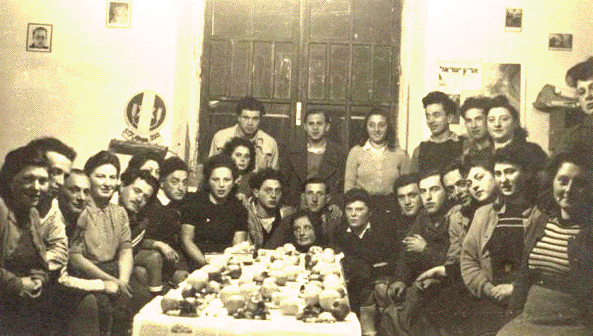
More than 25,000
Algerian Jews who survived the
Nazi Holocaust are being
recognized in 2018 as victims.

.
2. Remembering the
Forgotten...

|
|
|
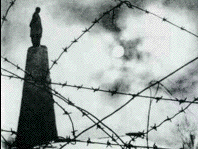
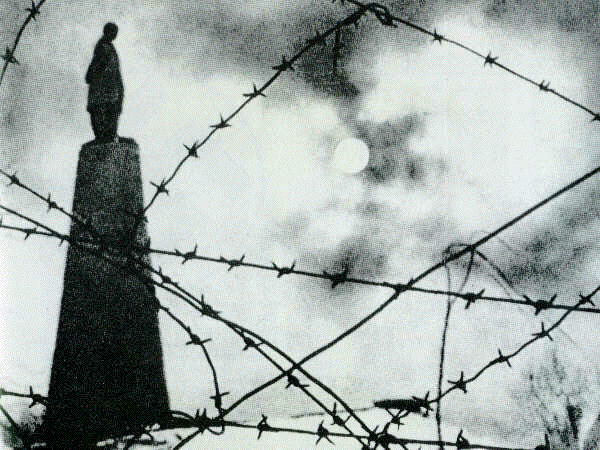
The
monument over the grave of
the great Ukrainian poet
Taras Shevchenko in Kaniv,
Ukraine, surrounded by the
barbed wire of a German
concentration camp in World
War II.
|
|
|
|
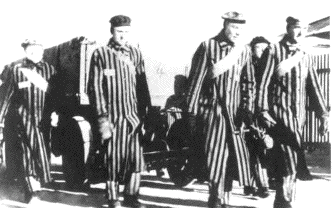
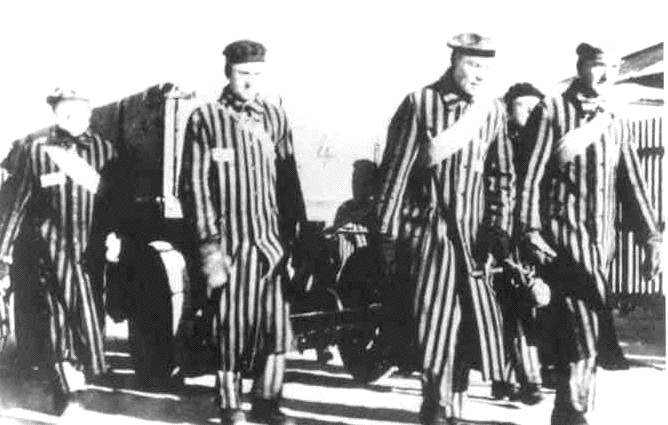
Prisoners
engaged in forced labor,
Sachsenhausen, 1940

|
.
|
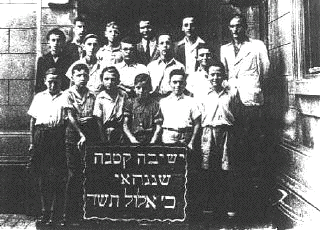
In
1939, thousands of
Jewish refugees
escaped Nazi
persecution
to the only place
that was open to
them...
|
<===
|
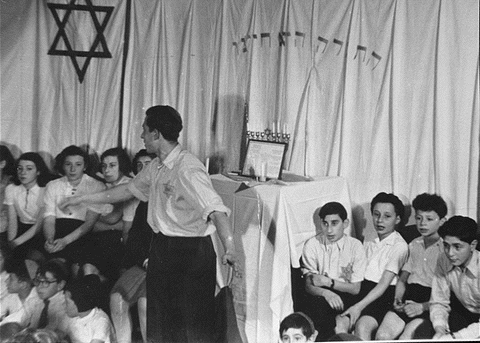
Religious
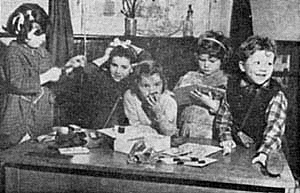
school for
Jewish refugee
children.
Shanghai
Ghetto, China,
September 8,
1944.
|
|
|
We Remember
Jewish Sompolno!
.
.
3. Notable Events:
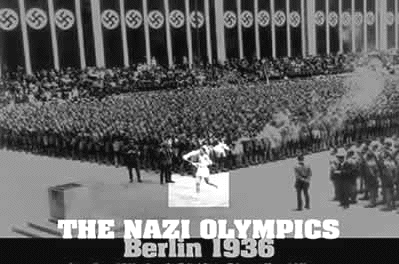
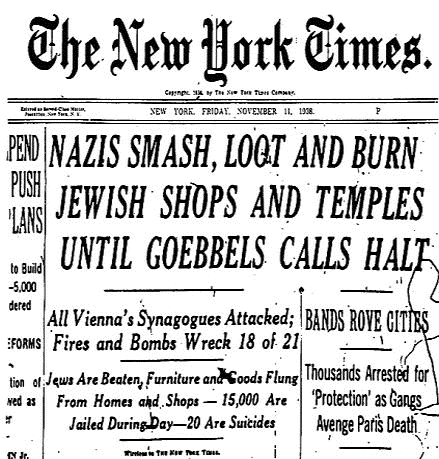
The Beginning of
The Holocaust:
Kristallnacht
or "The Night of Broken Glass"
pogrom of Nov. 9-10, 1938.
|
.End
of the "1000-year-old"
Nazi Reign
|
|
|
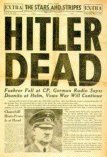
As
reported by The New
York Times:
May
2, 1945
May 8,
1945
|
|
.
|
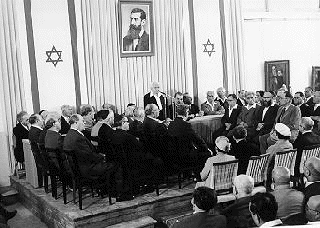
David
Ben-Gurion proclaiming the
establishment of the State
of Israel.
|
|
|
.
|
|
|
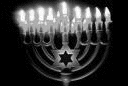
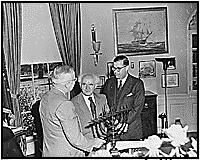
President
Truman meeting on May 8,
1951 with Prime Minister
David Ben Gurion of Israel
and Abba Eban. They
presented the menora as a
token of esteem for
President Truman's timely
recognition of the State
of Israel on May 14, 1948.
|
|
|
4A. Inmate Art
from Concentration Camps and Gettos:
Expressing the Inexpressible
|
|
 .. ..
|
|
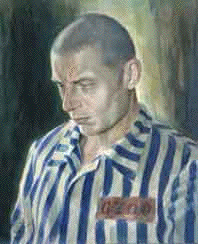
From
Stutthof Concentration
Camp:
Portrait of the prisoner
Wachlaw Lewandowski,
illegally
made in the camp
.
|
Self-Portrait by German-Jewish painter Felix
Nussbaum
|
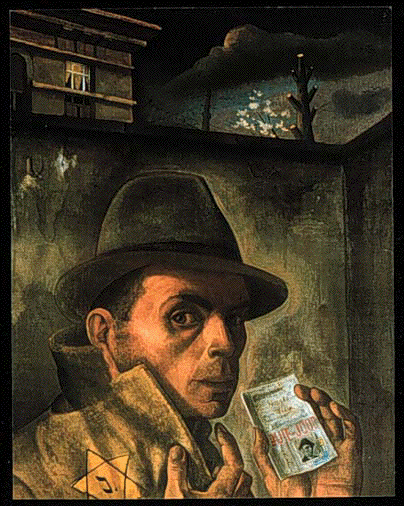
|
Nussbaum's
most famous
painting:
Self-Portrait
with Jewish
Identity Card,
probably from
late 1942. The
Nazi
occupation ID
card states
JEW in French:
JUIF, and in
Flemish: JOOD
|
|
This detail image portrays the German-Jewish painter
Felix
Nussbaum, who
was raised in
Osnabruck, a
city in
Germany.
During the
war, Felix and
his wife Felka
Platek were in
hiding for
their lives in
Brussels,
Belgium for
three years.
They were
arrested in
1944 and
deported on
the last
transport of
Jews from
Belgium to
Poland. Felix
and Felka were
prisoners No.
284 and 285 on
the train in
which they
were deported
on July 31,
1944. They
were gassed to
death at
Auschwitz on
August 3,
1944. Felix
was 39 years
old and Felka
was 45.
|
|
<connectexpress.com/~holocaustart/shoah_-_details2.htm>
|
.
|
.
|
|
.Shoah Paintings by David Olère (1902 - 1985),
Auschwitz Holocaust Survivor
|
|
.
|
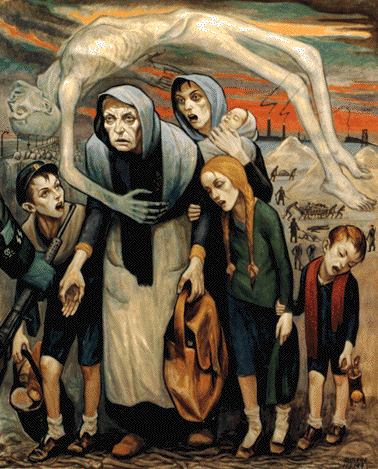
|
Unable
to Work / Les
inaptes au
travail
131x162
cm, A Living
Memorial to
the Holocaust,
New York.
|
Inability to work was often an immediate death
sentence.
In the
background of
this painting,
smoke rises
from the
crematorium to
form the SS
insignia. Of
the one
thousand Jews
in the convoy
that brought
Olère to
Auschwitz, 881
were
immediately
gassed. Only
six of the 119
selected for
work survived
the War.
|

Their Last Steps / Leurs derniers pas
73x54 cm,
Ghetto
Fighters
House, Israel
<fcit.usf.edu/holocaust/resource/gallery/olere.htm>
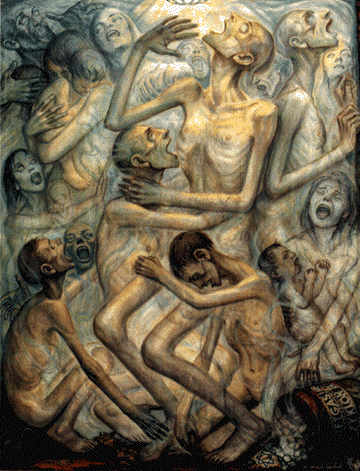
|
Gassing / Gazage
131x162 cm, A
Living
Memorial to
the Holocaust,
New York.
The container
in the lower
right is
labeled Zyklon
B.
|
Although Olère spent most of his time doing art for the
SS and
translating
BBC radio
broadcasts, he
was, from time
to time,
called upon to
help empty the
gas chambers.
<shoah.freeservers.com/photo.html>
<fcit.usf.edu/holocaust/resource/gallery/olere.htm>
|
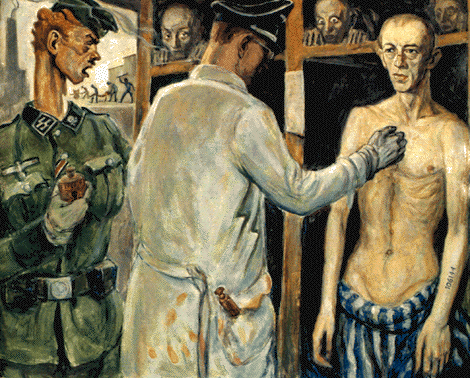
The Experimental Injection / La piqûre expérimentale
1945, 92x72
cm, A Living
Memorial to
the Holocaust,
New York.
The infamous
Dr. Mengele
administers an
injection as
terrified
prisoners look
on.
<shoah.freeservers.com/photo.html>
.
|
.
|
|
.
|
.
|
|
.
|
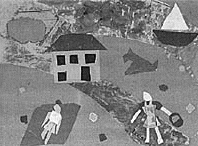
The Terezin (Theresienstadt) concentration
camp, an hour
north of
Prague (
Czechoslovakia),
was called a
"model ghetto"
during the
Second World
War. The Nazis
showed it off
to the Red
Cross to prove
that
conditions
weren't as
horrific was
thought, and
that child
inmates were
in fact being
educated by
other
imprisoned
artists,
writers and
intellectuals.
The reality,
of course, was
different,
only some 10
per cent of
the 15,000
children sent
there between
1942 and 1944
survived the
war. What did
survive,
however, were
over 4,000
drawings and
paintings they
left behind,
one of which
is posted at
left under the
title "Happier Place:
Picture from Terezin."
[Source:
Montreal
Holocaust
Memorial
Centre]
|
.
|
|
.
|
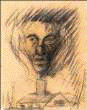
Yehuda Bacon
(b. 1929)
[Yad Vashem
Art Museum]
|
In Memory of
the Czech Transport to the
Gas Chambers, 1945,
Charcoal on paper
Yehuda Bacon
was born in Czechoslovakia
to a Chassidic family. In
1941, he was sent to
Terezin (Theresienstadt)
at the age of thirteen,
where he began to draw.
Whilst in Terezin, he
studied under the
direction of artists Otto
Unger, Bedrich Fritta and
Leo Hass. In 1943 he was
deported to Auschwitz. He
emigrated to Eretz Israel
with the Youth Aliya in
1946, studied art at the
Bezalel Academy of Art and
then continued his studies
in Italy, London, New York
and Paris. In 1961 he
testified at the Eichmann
trial. Bacon lectured in
the art department of
Haifa University and at
the Bezalel Academy of
Art, Jerusalem.
A short time
following his liberation
from Auschwitz, the
sixteen-year-old Bacon
drew this portrait of his
father who perished in the
death camp. Like a
necromancer, Bacon
conjures up the thin,
exhausted face and blazing
eyes of his father, the
disembodied face ascending
from the smoke. The image
of the father whose life
was ended in the furnaces
of Auschwitz is
reconstructed by the son
who still remembers the
father he was recently
separated from. This
recollection will never be
eradicated since Bacon
committed it to paper. The
turbulent mental state of
the artist is manifested
by the agitated, quivering
lines surrounding the
portrait. In the lower
section of the drawing,
where we would expect to
see his father's body, we
detect the crematoria and
a body hanging off the
barbed wire fence which
surrounded the camp. In
the right-hand corner, the
artist has added the date
and time: 10.VII.44, 22:00
- marking the exact moment
when his father perished.
|
|
.
|
|
|
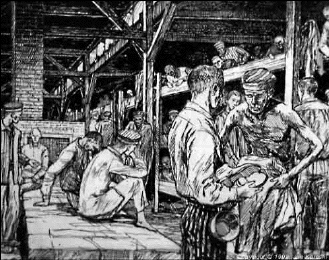
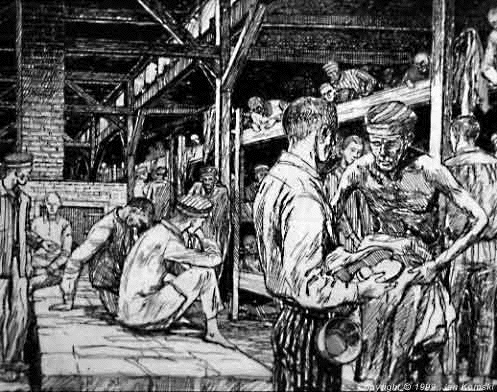
Auschwitz-Birkenau
Drawing
by
the Auschwitz Survivor and
Polish Artist Jan Komski
[Originally
designed for fifty-two
horses, these wooden
stables were used
extensively in
Auschwitz-Birkenau. Each
provided the living space
for over a thousand
prisoners. More than two
hundred of these barracks
were built. In typical,
thorough fashion, they
were constructed complete
with the rings for tying
the horses attached to the
walls.]
Polish artist Jan Komski is
a survivor of Auschwitz. His
personal history is full of
remarkable events, including
being part of the very first
prisoner transport to arrive
in Auschwitz, and being part
of one of the most famous
escapes from the camp. (To
read a synopsis of Jan
Komski's story, click in here.) |
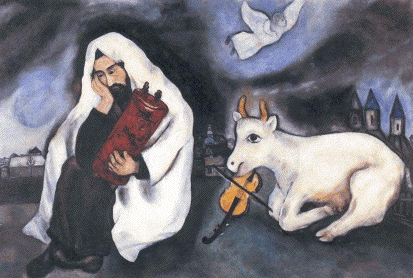
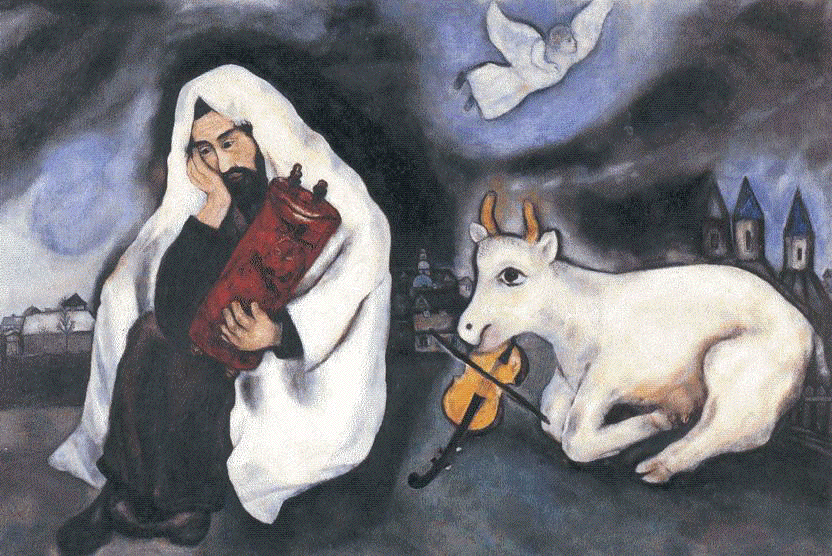
<Marc
Chagall (1887-1985):
Loneliness, 1933>
|
|
|
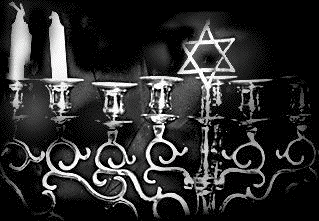
.
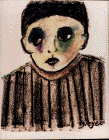
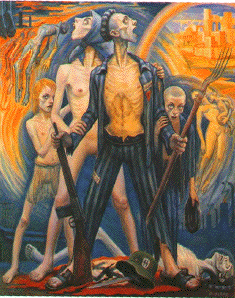
4B. Contemporary
Art About and in Response to the
Holocaust
|
|
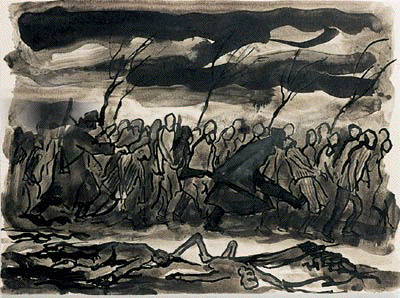
Jan Hartman's
painting of a death march
he was on
from Auschwitz to Bielsko.
[Photo
Credit: London Imperial
War Museum.]
|
.
4C. Holocaust
Literature and Remembrance:
|
.
|
|
|
A 6893
by Anna
Sotto
|
|
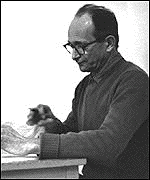
All
There is to know about
Adolf
Eichmann
by L. Cohen
|
She didn't
cry
When they removed
Her clothes, her ring
Her shoes, her hair.
But when they took away
Her name
She wept.
|
Eyes: Medium
Hair: Medium
Weight: Medium
Height: Medium
Distinguishing features:
None
Number of fingers: Ten
Intelligence: Medium
What
did you expect?
Talons?
Oversize incisors?
Green saliva?
Madness?
|
|
|
|
<w3.kfar-olami.org.il/reed/resources/theme/holocaust/CONTENTS.htm>
|
|
|
|
|
|
"In a
Sentence, I Felt Like I
was Going Through the
Holocaust All Over
Again"
Interview
with Michael
Goldman-Gilad
Investigative Officer
for the Eichmann Trial
|
![Eichmann's
fingerprints [text]](Pictures_iSurvived-4/eichman-yadVashem.GIF)
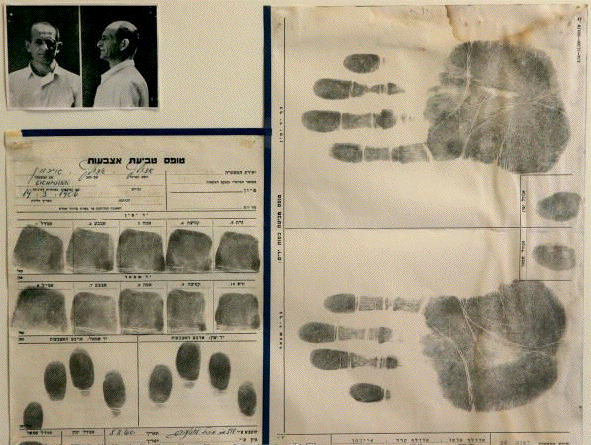
.
|
|
Essays
and Poems of Romanian Jews
from the city of Oradea
(in Hungarian, Nagyvarad )
during the Holocaust:
[unless
otherwise stated,
translated by Susan
Geroe]
|
|
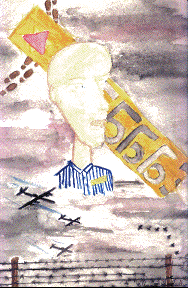
© Al Filreis:
Hope
|
|
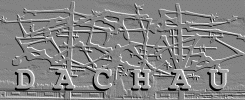
by Larissa
Andrusyshyn
1.
an electrified
barbed wire
fence,
a ditch,
and a wall with
seven guard
towers
surrounds.
human
remains arrive
suffocated
and left in
boxcars.
the camp is
intended for the
incarceration
of political
opponents.
they
were buried in
mass graves
until the
construction of
crematoriums
was completed.
new and more
efficiently
built
it is estimated
that it took
10-15 minutes to
incinerate
a body there.
exact
numbers of the
victims are
inconclusive,
because no one
took record
after the flood
of russian
p.o.w.s
2.
at the time of
liberation
the american
troops forced
local farmers to
drive carts
loaded with
corpses through
the town of
dachau
to educate the
people there.
3.
prisoners hair
was sent
to a. zink fur
manufacturer
ltd. of
nuremburg
.50 marks was to
be paid
for every
kilogram of hair
sent.
womens hair,
because it was
longer,
was spun into
yarns
and made into
socks for boat
crews.
4.
m. tregenza
archeologists
report, dachau:
during an
excavation
uncovering the
mass grave
he puts his
hands to the
deep grey sand
finds carbonized
wood and human
bone fragments
and one incisor
tooth
shinning in the
black like a wet
glass eye.
5.
today it is
possible
to buy a brand
new condo
a few feet from
the walls of
dachau
youll see the
trenches
beyond your
backyard fence
and above your
neighbors house
the tall
mcdonalds sign
glowing in the
distance
outside
your window
the gate that
reads
"arbeit macht
frei"
labor
will make you
free.
.
|
|
|
|
Shemà
You
who live safe
In your warm
houses,
You who return
in the evening
to find
Hot food and
friendly
faces:
Consider
if this is a
man
Who works in
the mud
Who does not
know peace
Who fights for
a scrap of
bread
Who dies
because of a
yes or a no.
Consider if
this is a
woman,
Without hair
and without
name
With no more
strength to
remember,
Her eyes empty
and her womb
cold
Like a frog in
winter.
Consider
that this has
been:
I commend
these words to
you.
Engrave them
on your hearts
When you are
in your house,
when you walk
on your way,
When you go to
bed, when you
rise.
Repeat them to
your children.
Or
may your house
crumble,
Disease render
you powerless,
Your offspring
avert their
faces from
you.
--
Primo Levi
|
|
|

- Humor as a
Defense Mechanism in the Holocaust
 [2000 Ph.D. Thesis
at Tel-Aviv University [2000 Ph.D. Thesis
at Tel-Aviv University
by Dr. Chaya Ostrower under the
supervision of Prof. Avner Ziv]
- Humor in the
Holocaust: Its Critical, Cohesive,
and Coping Functions
by John Morreall,
Ph.D.
|
A Jewish
father teaching his son
how to say grace before
meals:
|
|
"Today
in Germany the proper
form of grace is 'Thank
God and Hitler.'"
"But suppose the Führer
dies?" asked the boy.
"Then you just thank
God."
|
|
Hitler and
his Fortune Teller:
|
|
As
Hitler's armies faced
more and more setbacks,
he asked his astrologer,
"Am I going to lose the
war?"
"Yes," the astrologer
said.
"Then, am I going to
die?" Hitler asked.
"Yes."
"When am I going to
die?"
"On a Jewish holiday."
"But on what holiday?"
"Any day you die will be
a Jewish holiday."
|
|
To Hang or
Not to Hang Them?
|
|
In
Munich, cabaret
performer Weiss
Ferdl would
bring out large
photographs
of Hitler, Goering, and
other Nazi leaders, and
then think out loud,
"Now should I hang them,
or line them up against
the wall?"
|
- Modern Humor:
Iran Holocaust
Cartoon Contest
.
4D.
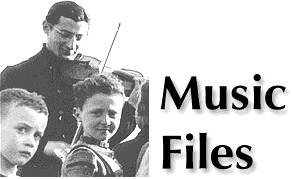
Music of the
Holocaust: Music of Another World
--A Remembering for the Future
|
|
Music
Silenced By
Hitler
|
|
During
the course of
World War II,
the Nazis
successfully
used their
control of
music and the
arts as a
powerful
propaganda
weapon against
those aspects
of German
cultural life
they hated
most. In terms
of music, this
eclectic
blacklist
included
compositions
from Europe's
modernism
movement,
music written
by Jewish
composers,
music
containing
explicit
sexuality,
black jazz,
and any piece
written in
opposition to
Nazi ideology.
Calling on a
combination of
racial
doctrine,
Wagnerian
anti-Semitism,
and their own
belief of
Aryan
supremacy, the
Third Reich
sought to
destroy every
form of music
it had branded
with the term
Entartete
Musik
(degenerate
music) during
the period
that led to
World War II.
Adolf Hitler
and Joseph
Goebbels
worked closely
to formulate a
plan that
would erase
this music
from the face
of the earth.
Through their
efforts, a
generation of
musical
innovation and
promise was
not only
abruptly
curtailed in
Europe, but
excluded from
its rightful
status in
history. What
should have
been the
dawning of a
thrilling new
phase of
musical
evolution,
instead fell
silent under
the dark
shadows of the
swastika.
|
|
<University
of Virginia,
USA, Source:
virginia.edu/topnews/releases2001/music-feb-16-2001.html>
|
.
|
.
|
|
|
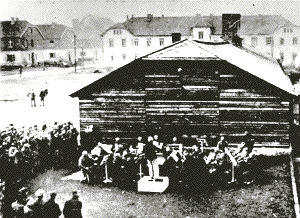
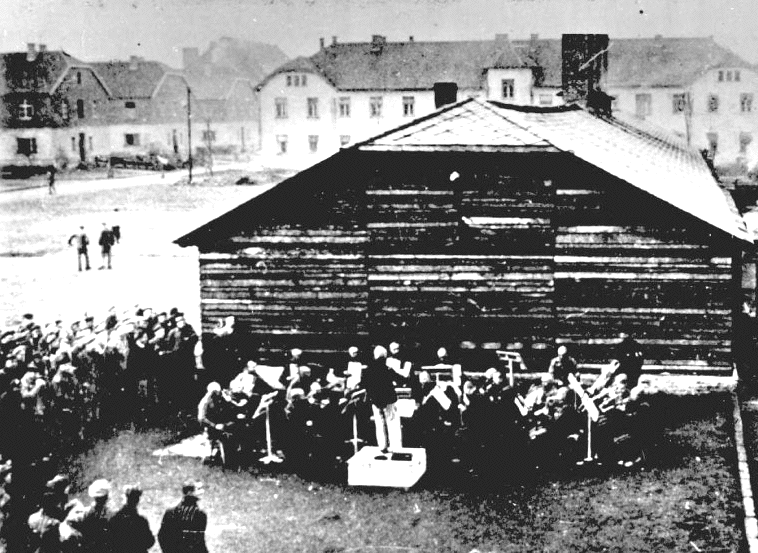
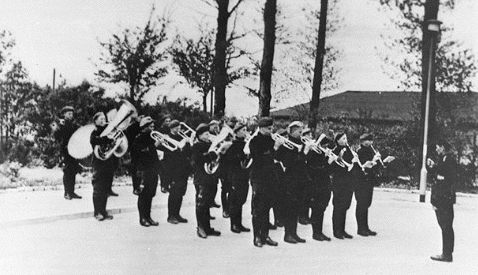
Camp
Orchestra at
KL Auschwitz
I. --SS
photograph,
1941.
[Courtesy
Auschwitz-Birkenau
Museum,
Poland]
|
|
.
|
|
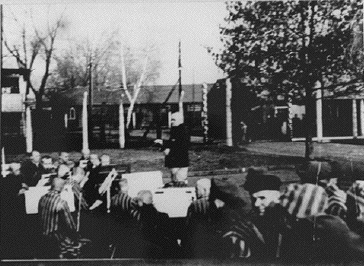
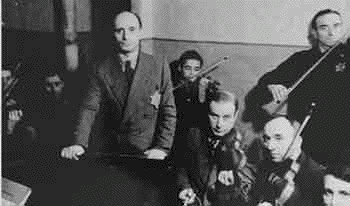
Prisoners'
Orchestra
during a
Sunday concert
for the SS-men
in Auschwitz
in 1941.
The orchestra
was probably
conducted by
the inmate
Franciszek
Nierychlo.
|
|
[Photo
credit: Main
Commission for
the
Investigation
of Nazi War
Crimes,
courtesy of
USHMM
<fcit.coedu.usf.edu/holocaust/gallery/81216.htm>]
|
|
.
|
|
|
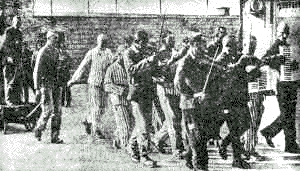
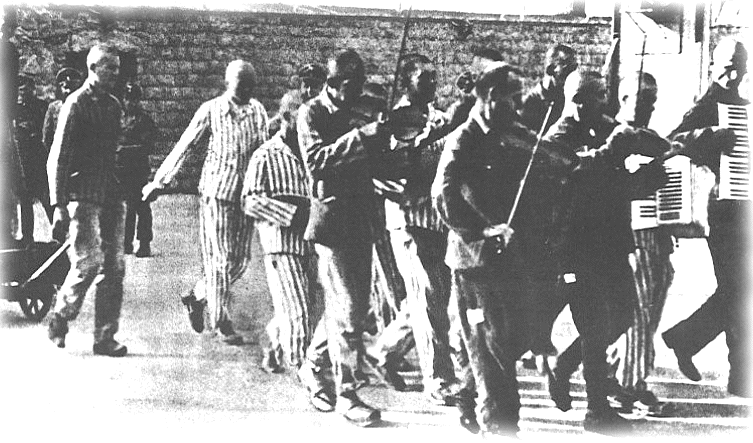
Prisoners'
Orchestra: Gestapo
men viewing a
parade of
prisoners
forced to
march while
playing music.
|
|
In
addition to
torture and
dehumanization,
the Nazis
forced camp
inmates to
perform the
most
incongruous
activities.
One such
example was
the camp
orchestra
which was
formed to
delude the
prisoners into
a sense of
false
well-being.
Inmates with
musical
abilities were
forced to
march around
the camp
playing music,
while being
ridiculed.
|
<holocaustmmb.org/The_Arbor_of_History/35.html>
|
|
|
|
Amidst the horrors of Auschwitz, music was a part of
daily life.
There were
several
orchestras and
bands in the
two camps,
made up
entirely of
inmates.
Marches were
played at the
camp gates as
the labour
gangs were led
out to work
each morning
and musicians
were called
upon at all
times of the
day and night
to perform for
the SS and
Nazi officers.
For those
incarcerated
music was, in
Primo Levi's
words, "the
perceptible
expression of
the camp's
madness". For
the surviving
orchestra
players, music
was their
salvation. -- <BBC Source: bbc.co.uk/music/classicaltv/holocaust>
|
|
.
5. Holocaust
Memorial Foundations, Repositories,
and Museums:
Forever
let this place be a cry of
despair and a warning to
humanity, where the Nazis
murdered about one and a
half million men, women
and children, mainly Jews
from various countries of
Europe.
[Auschwitz
and Birkenau, 1940-1945]
|

|
Auschwitz
- Birkenau
Exhibition
|
|
.
|
|
|
|


- C.A.N.D.L.E.S.
(Children of Auschwitz-Nazi Deadly
Lab Experiments Survivors)
Holocaust Museum
founded by the Auschwitz Holocaust
Survivor Eva Mozes Kor (A-7063) from
Transylvania, Romania
who together with her twin sister
Miriam survived the Auschwitz
experiments of the infamous Dr.
Mengele.
- Holocaust
Memorial Center: Illuminating the
Past, Enlightening the Future

|
.
|
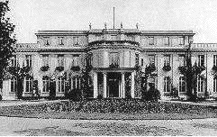
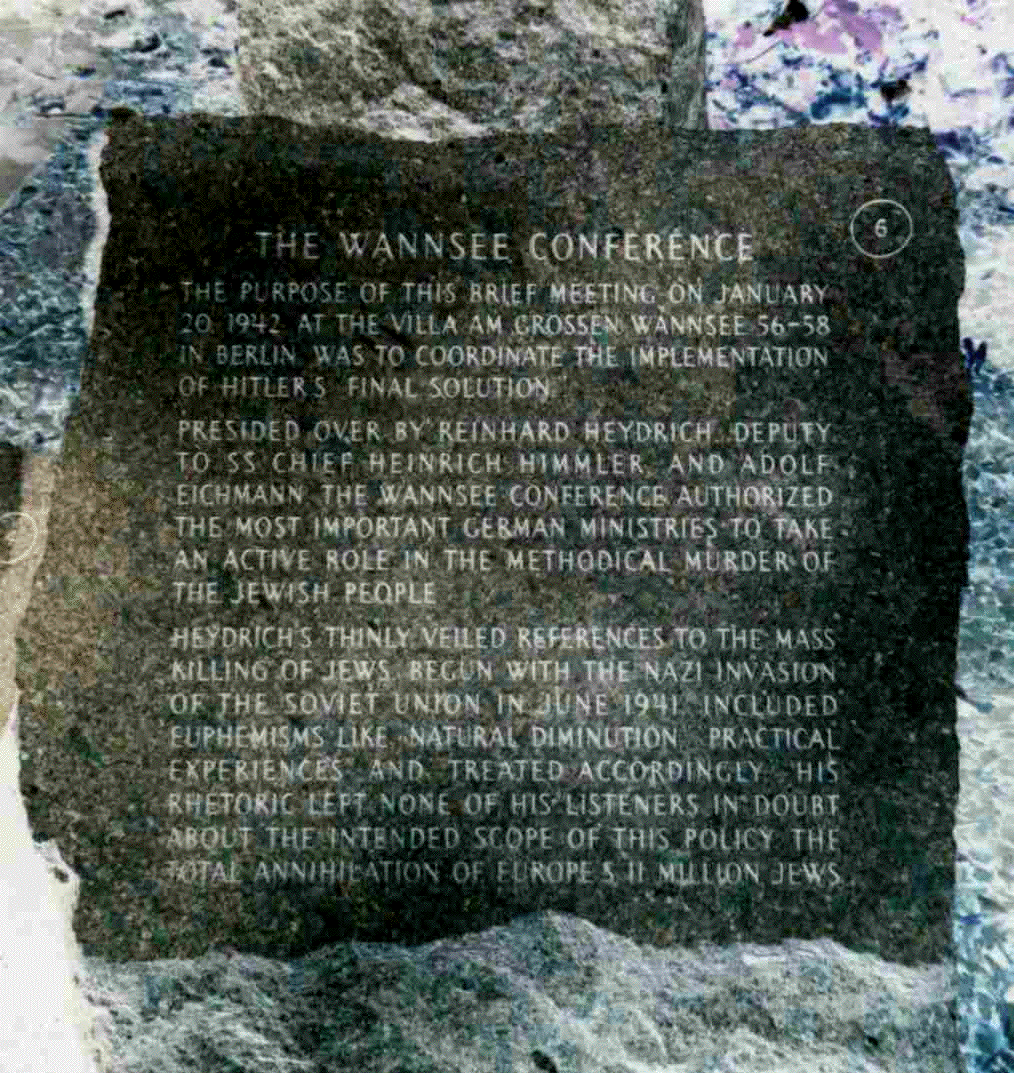
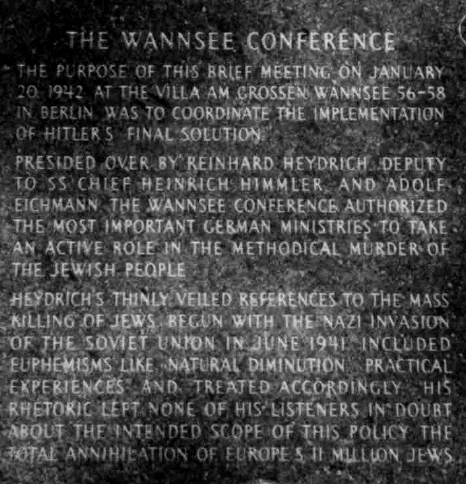
House of the Wannsee
Conference
|
|
On January
20, 1942, fifteen
high-ranking civil
servants and SS-officers
met in this house to
discuss plans of "The
Final Solution" of the
Jewish question in
Europe, the decision to
deport the Jews of
Europe to the East and
murder them. On the 50th
anniversary of the
conference a memorial
and educational center
was opened in the villa
in 1992.
|
|
|
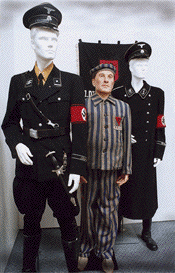
World War II
Museum:
The Holocaust
- Dallas Holocaust
Memorial Center
- Gay Holocaust
Memorial Site
- A Gallery of
Holocaust Images
- New England
Holocaust Memorial, Boston,
Massachusetts, USA

|
|
A collection of over 4,300 videotaped
interviews
with witnesses
and survivors
of
the Holocaust
that is part
of
|
|
Sterling
Memorial
Library, Yale
University,
New Haven,
Connecticut,
USA.
|
|
- Florida Holocaust
Museum
- United States
Holocaust Memorial Museum
- House of the
Wannsee Conference
- Sachsenhausen
Gypsy Museum (for Roma &
Sinti)
- Yad Vashem: The
Holocaust Martyrs'and Heroes'
Remembrance Authority
- The Mechelen
Shoah Museum of Deportation and
the Resistance
- Budapest
Holocaust Memorial Center
- A List of
Holocaust Museum and Memorials
- Global Directory
of Holocaust Museums
|
|
.
|
|
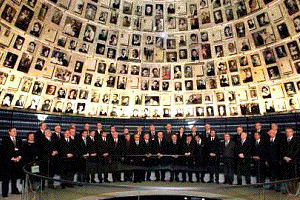
World leaders
at Yad Vashem Holocaust
Memorial Museum
Jerusalem, March 16, 2005.
|
.
6. Notable Web sites
Honoring the Memory of the Holocaust
|
PBS's
|
|

|
|
.
|
3
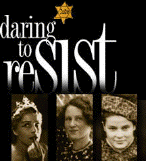
women face the Holocaust
|

- Sion Soeters 's
Holocaust website
- The Holocaust:
Lest We Forget
- The Website of
Volozhin, also known as Valozhyn,
Volozhy'N, Wolozyn, Volozine,
Wolozine
-
|
United
States Holocaust
Museum Memorial:
|
|

|
- "Wreath of
Memories"
-- Beloit
College Students honor the
enduring spirit of children in A
Nazi Ghetto
through dance
performing at the US Holocaust
Memorial Museum
|

|
|
|
|
|

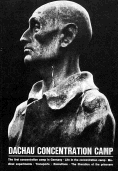
An
overview of
the people and
events of the
Holocaust
through
photographs,
documents,
art, music,
movies, and
literature
|
.
|
|
|
|
|

|
|
...
preserving the
past to
protect the
future ...
|
|
|
|
.
|
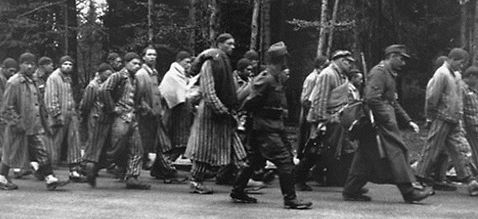
Prisoners
on a death
march from
Dachau move
towards the
south along
the Noerdliche
Muenchner
Street in
Gruenwald,
Germany, April
29, 1945.
Photo
Credit: KZ
Gedenkstaette
Dachau
<nowpublic.com/nazi_death_marches_horror_story_released_0)
|
|
.
|

- Beyond the Pale:
Russian Jews Exhibit Guide
|
"BEYOND THE
PALE" refers to the
provinces in Russia
where Jews were forced
to live during the 18th
and 19th centuries,
called "The Pale of
Settlement."
|
- Nazism and the
Holocaust
-
|
US
Holocaust Museum
Memorial
|

|
|
Hidden
Children and
the Holocaust
|
-
The
Holocaust School's Webpage
St.
John's Preparatory School,
Danvers, Massachusetts, USA
-
|

|
|
T h e
H o l o c a u s t
|
|
-
The Ernest and
Elisabeth Cassutto Memorial
Page: Dutch Survivors of the
Holocaust
-
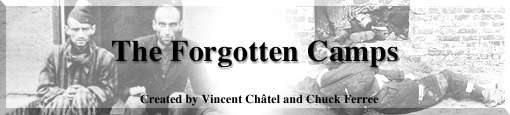
.
7. Selected
Photos, Photo Albums, and Posters
Related to the Holocaust
.
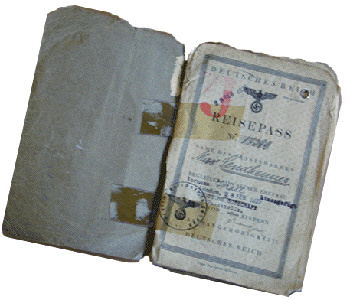
8. Holocaust
Memorial Plaques, Philatelic
Stamps, and Related Artifact
Materials
|
|
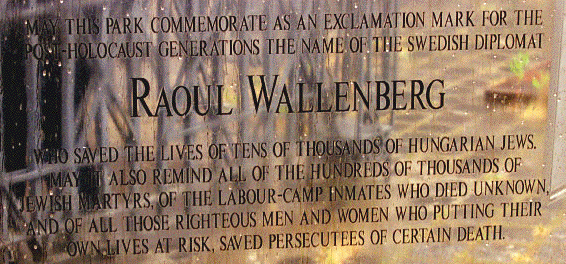
Raoul
Wallenberg Memorial Park,
Budapest, Hungary.
|
|
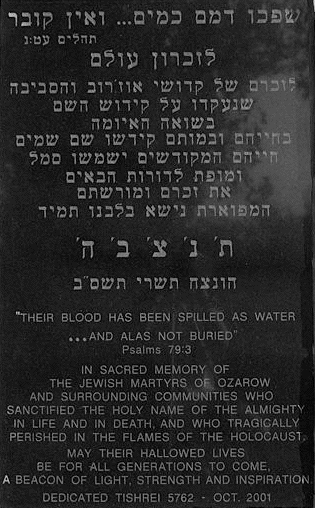
This
park commemorates
Wallenberg and others who
protected many of
Budapest's Jews from
deportation to
extermination camps. The
sign reads: May this park
commemorate as an
exclamation mark for the
post-Holocaust generations
the name of the Swedish
diplomat Raoul Wallenberg
who saved the lives of
tens of thousands of
Hungarian Jews. May it
also remind all of the
hundreds of thousands of
Jewish martyrs, of the
labour-camp inmates who
died unknown, and of all
those righteous men and
women who, putting their
own lives at risk, saved
persecutees of certain
death.
|
|
<fcit.usf.edu/holocaust/GALL34R/WALL01.HTM>
|
|
.
|
|
|
|
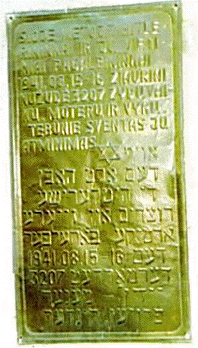
Commemorative
Plaque
at the Bajorai
Killing Site in
Lithuania
The
Jews from the
Rokiskis
district were
murdered at
Bajorai, also
known as
Velniaduobe. The
inscription is
written in two
languages,
Lithuanian and
Yiddish and, in
translation,
reads:
|
"In this place Hitlerists and their local helpers on
August 15 and
16, 1941
cruelly killed
3207 Jews -
children,
women, men.
Let the memory
of them be
blessed."
|
Courtesy
JewsiGen:
<shtetlinks.jewishgen.org/rokiskis/Holocaust.htm>
|
|
|
|
.
.9. Holocaust
Online Exhibits
.
.10. The Nazi
Plunder of Valuables
|
|
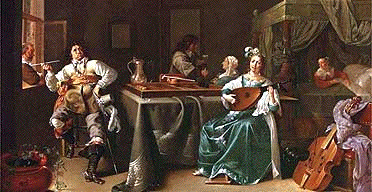
From
the Nazi loot: Jacob Duck's
Merry Company with a Woman
Playing a Lute
|
|
Documentation
from the United States
National Archives and
Records Administration
(NARA):
|
|
|
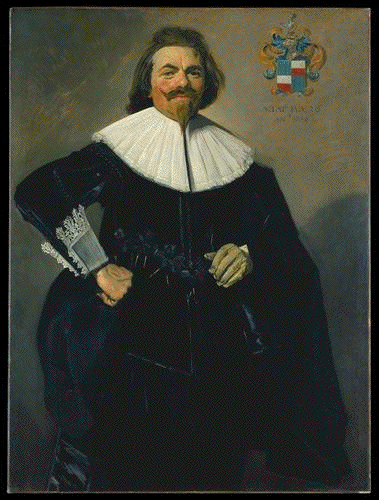
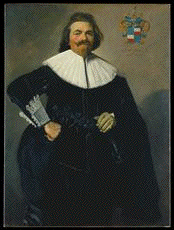
About the
Frans Hals portrait
(Repatriated Nazi
Loot)
The
Cleveland Museum of Art,
USA acquired this
painting at a London
auction in 1999. The
painting had been
recently returned to the
heirs of Baron Alphonse
von Rothschild after 52
years in the holdings of
the Kunsthistorisches
Museum, Vienna.
Confiscated from the
Rothschild apartments in
Vienna by the Third
Reich during the
Anschluss (the political
union of Nazi Germany
and Austria in 1938),
the painting was hidden
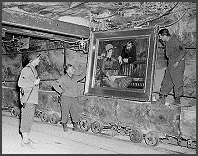
with other looted art
treasures in a salt mine
during World War II.
After the war, the
painting remained in the
collections of the
Austrian State museums
until early 1999 when it
was returned to the
family along with other
works of art from the
same collection. They,
in turn, decided to sell
many of the works at
auction.
<clevelandart.org/exhibcef/consexhib/html/aboHals.html>
|
Frans Hals
(Dutch, 1582-1666)
Tielemann Roosterman
Oil on canvas, 1634
Leonard C. Hanna, Jr. Fund
|
|
|
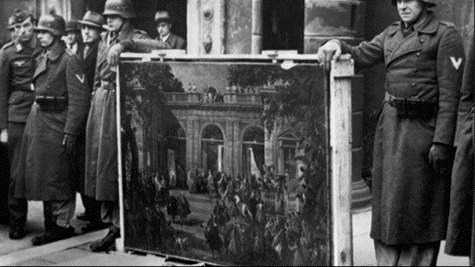
THE
RAPE OF EUROPA
tells the epic story of the
systematic theft, deliberate
destruction and miraculous
survival of Europe's art
treasures during the Third
Reich and World War II. In a
journey through seven
countries, the film takes
viewers into the violent
whirlwind of fanaticism,
greed, and warfare that
threatened to wipe out the
artistic heritage of Europe.
For twelve long years, the
Nazis looted and destroyed
art on a scale unprecedented
in history. But heroic young
art historians and curators
from America and across
Europe fought back with an
extraordinary campaign to
rescue and return the
millions of lost, hidden and
stolen treasures. Now, more
than sixty years later, the
legacy of this tragic
history continues to play
out as families of looted
collectors recover major
works of art, conservators
repair battle damage, and
nations fight over the fate
of ill-gotten spoils of war.
[PBS Documentary]
|


.
|
|
Suggestions for further
material to be included in here are
welcome.
|


|
|
Holocaust Remembrance,
Sanctuary, and Beyond ...
|
.
|

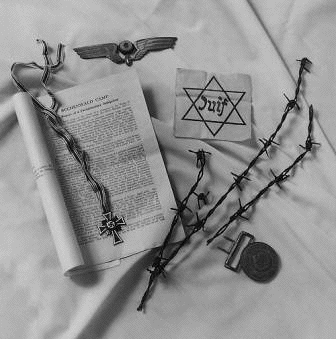
 Holocaust Survivors and Remembrance Project: "Forget You Not"™.

 "Forget You Not"™..
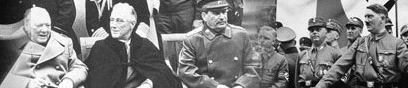
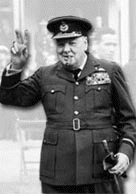 Churchill and the
Holocaust
Churchill and the
Holocaust






























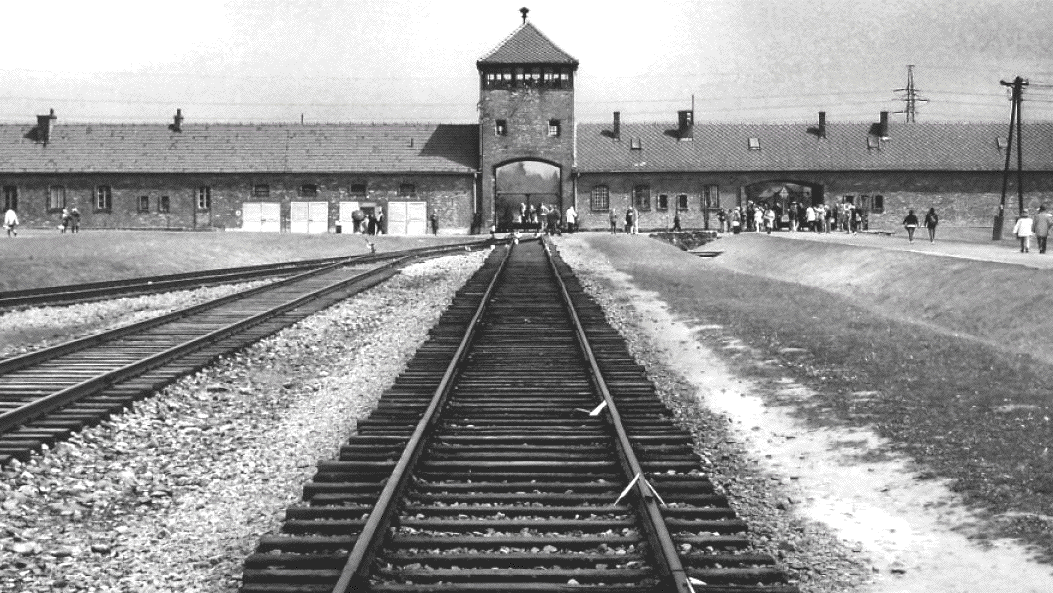
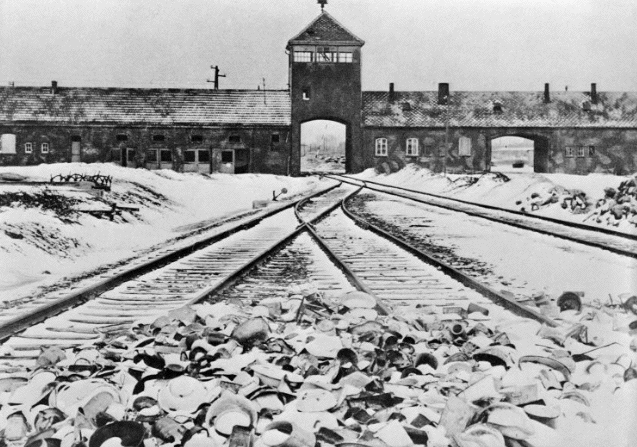
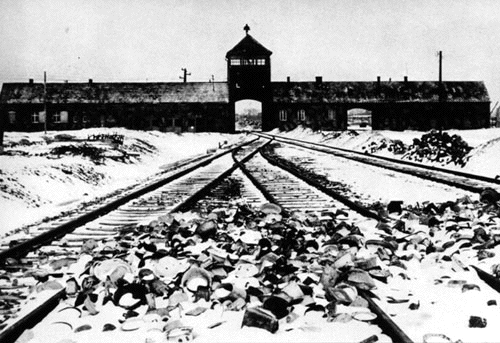
 12
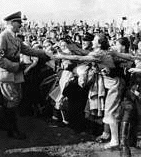
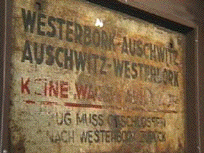
Selected Sets of Holocaust Pictures
from Yad Vashem
12
Selected Sets of Holocaust Pictures
from Yad Vashem